
Sciatic Pain Relief: Proven Treatment Modalities That Actually Work
Sciatic pain can transform simple daily activities into overwhelming challenges. Whether you're struggling to sit through work meetings, unable to lift your child's car seat, or wondering when this pain will finally go away - you're not alone. We've developed comprehensive treatment approaches that address the root causes of sciatica and provide lasting relief for people from all walks of life. At our Amherst, NY practice, we see patients throughout the Buffalo area struggling with various forms of sciatica.
Understanding Sciatica: Why Treatment Approach Matters
Sciatica isn't a one-size-fits-all condition. Each person's sciatic pain stems from different causes, shows unique symptoms, and requires personalized treatment strategies. That's why our approach at 716 Chiropractic & Wellness in Amherst focuses on identifying the specific cause for sciatic nerve pain in each individual and developing targeted treatment plans.
At our practice, we see how different lifestyles and jobs contribute to various types of sciatica. A business professional who works remotely may develop posture-related sciatica from spending hours at a makeshift home office, while an active individual who enjoys weekend sports but sits extensively for work might experience acute nerve compression from a sudden movement. Understanding these different situations helps us determine the most effective treatment approach for each patient's specific needs.
Comprehensive Treatment Modalities for Sciatic Pain Relief
Manual Soft Tissue Release
Manual soft tissue release is a key part of our sciatic pain relief approach. This hands-on technique targets the specific muscles and fascia contributing to nerve compression and inflammation.
How It Works: Dr. Ball uses precise pressure and movement to break up adhesions in muscles like the piriformis (deep hip muscle), quadratus lumborum (lower back muscle), and buttock muscles. This direct approach helps reduce tension that may be compressing or irritating the sciatic nerve.
Manual soft tissue release works especially well for patients whose work requires long periods of sitting, such as remote workers who find themselves hunched over kitchen counters or makeshift home offices for 9+ hours daily. These individuals often develop tight hip flexor muscles (front of the hip) and overactive piriformis muscles (deep hip muscle) that compress the sciatic nerve, leading to dull lower back pain that spreads into the buttock area.
We also see excellent results in people who are on their feet all day and lift heavy objects, like warehouse or healthcare workers. The constant physical demands can create chronic tension in the lower back and buttock muscles, leading to sharp pain that spreads down the thigh and gets worse with bending and lifting activities.
Manual soft tissue release works especially well for addressing these types of muscle imbalances and tension patterns, regardless of their underlying cause.
Instrument Assisted Soft Tissue Massage (IASTM)
Our instrument assisted therapy takes soft tissue treatment to the next level, allowing us to reach deeper layers of muscle and fascia that may be contributing to your sciatic pain.
The Technique: Using a specialized stainless steel instrument, we can identify and treat scar tissue, adhesions, and tissue restrictions that manual techniques alone might miss. This approach works especially well for breaking up stubborn adhesions in the lower back muscles and IT band (outer thigh).
Benefits for Sciatica:
Increased blood flow to affected areas
Improved tissue healing and recovery
Enhanced flexibility and range of motion
Reduction in chronic muscle tension
Clinical Uses: We frequently use instrument assisted therapy for patients who maintain active lifestyles but have jobs that require long periods of sitting at a desk, driving or travel. Many of our patients spend long hours in seated positions during the week and then engage in sports on the weekends, which often creates a unique pattern of sciatic pain. The long periods of sitting create muscle imbalances and stiffness, which can lead to sudden injury during quick movements like jumping or pivoting during weekend activities.
This type of situation often involves both sudden injury from sports activities and chronic tension patterns from long periods of sitting. The combination requires addressing both the immediate injury and the underlying posture issues that contributed to the problem.
Chiropractic Adjustments for Spinal Function
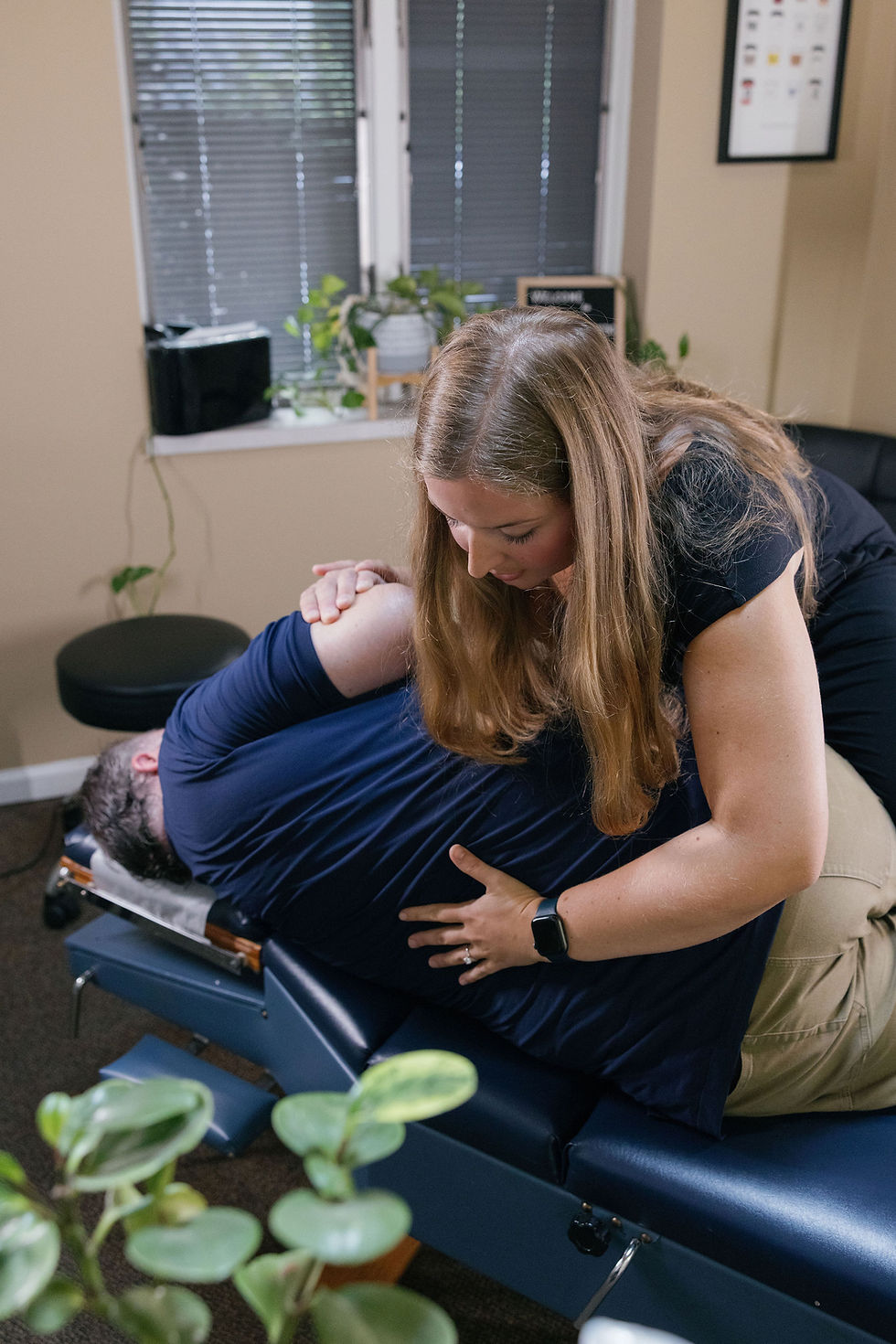
Chiropractic adjustments are a key part of effective sciatic pain relief, especially when spinal misalignment or joint problems contribute to nerve compression.
Our Approach: Dr. Ball uses precise, gentle adjustments to restore proper movement and alignment to spinal segments. This helps reduce pressure on nerve roots and improves overall spinal function.
Specific Techniques:
Lumbar spine adjustments to address disc-related sciatica
Sacroiliac joint adjustments for pelvic misalignment
Gentle mobilization techniques for sensitive or acute cases
Pregnancy-Related Uses: Many new mothers develop sciatic pain due to the significant body changes that occur during pregnancy and childbirth. The combination of hormonal changes that soften ligaments, altered posture from carrying a growing baby, and the physical demands of caring for a newborn can create pelvic misalignment and soft tissue strain. These mothers often struggle with pain that spreads down the leg, making it difficult to bend over cribs, carry car seats, or even hold their babies comfortably.
This type of sciatic pain typically responds well to gentle chiropractic adjustments combined with core re-engagement exercises and coaching for baby care activities. The key is addressing both the structural changes from pregnancy and the new movement patterns required for infant care.
Cupping Therapy for Deep Tissue Relief
Cupping therapy offers a unique approach to sciatic pain relief by creating negative pressure that helps decompress tight tissues and improve circulation.
How Cupping Helps Sciatica: The suction created by cupping helps lift and separate tissue layers, reducing compression on the sciatic nerve. It's particularly effective for addressing chronic muscle tension in the gluteal region and lower back.
Treatment Process: Cups are strategically placed over tight muscle groups, creating gentle suction that promotes blood flow and tissue healing. Patients often perform gentle movements while cups are in place to maximize therapeutic benefits.
Work-Related Uses: Individuals who are on their feet all day and lift heavy objects, like those in the service industry or trades, face unique challenges with sciatic pain due to the physical demands of their job. Many work 12-hour shifts that involve constant standing, walking, and heavy lifting. This combination of long periods of weight-bearing activities and repetitive lifting can create chronic tension in the buttock muscles and lower back, leading to sharp pain that spreads down the thigh and gets worse throughout their shifts.
Cupping therapy can work especially well for this type of situation because the decompressive effects help counteract the constant compression and tension that builds up during long work periods.
Specialized Stretches for Sciatica Nerve Pain
Therapeutic Stretching Programs
While general stretching can be helpful, therapeutic stretches for sciatica nerve pain require specific targeting and proper technique to work well. Our approach focuses on addressing the underlying muscle imbalances and restrictions contributing to your pain.
Key Stretch Categories:
Piriformis-Focused Stretches
The piriformis muscle is often involved in sciatica, especially in desk workers and those with postural issues. Our targeted piriformis stretches help release tension in this deep hip muscle that can compress the sciatic nerve.
Hamstring and Buttock Mobility
Tight hamstring muscles (back of the thigh) and buttock muscles can contribute to sciatic nerve tension. We teach specific techniques that address these muscle groups while protecting the sensitive nerve tissue.
Core Stabilization Movements
Weak core muscles often contribute to poor posture and increased stress on the lumbar spine. Our core-focused exercises help provide the stability needed to prevent future sciatic episodes.
Personalized Stretch Protocols
Each patient receives a customized stretching program based on their specific presentation and lifestyle demands:
For Remote Workers: We focus on stretches targeting hip flexor muscles (front of the hip) and postural muscles that become tight from long periods of sitting. These individuals often need specific techniques to counteract the forward head posture and hip flexor tightness that develops from working at non-ideal home setups.
For Active Professionals: Those who maintain sports and recreational activities while managing jobs that require extensive travel or driving receive stretches that emphasize dynamic warm-up and recovery. These protocols help prevent injury during weekend activities while addressing the stiffness that accumulates from long periods of sitting during the work week.
For New Mothers: We emphasize gentle core re-engagement and pelvic floor work that accommodates the ongoing recovery process while enabling them to safely care for their newborns. These stretches are designed to address the postural changes from pregnancy while being practical for busy mothers.
For Workers on Their Feet: We teach quick, effective stretches that can be performed during work breaks to address the accumulating tension from long shifts. These protocols focus on counteracting the effects of prolonged standing and repetitive lifting motions for individuals like warehouse workers, healthcare staff, or others in physically demanding roles.
How Long Does Pain from Sciatic Nerve Last?
One of the most common questions we hear is about recovery timelines. The duration of sciatic pain varies significantly based on several factors:
Factors Affecting Recovery Time
Underlying Cause:
Muscular/postural issues typically resolve in 2-6 weeks
Disc-related problems may take 6-12 weeks
Structural issues require longer treatment timelines
Treatment Approach:
Comprehensive multimodal treatment accelerates recovery
Early intervention leads to better outcomes
Consistent follow-through with home exercises improves results
Individual Factors:
Age and overall health status
Activity level and occupation
Adherence to treatment recommendations
Recovery Timelines: What to Expect
Week 1-2: Most patients experience initial pain reduction and improved sleep
Week 3-4: Significant functional improvements in daily activities
Week 4-8: Return to normal activities and exercise
Week 8+: Focus on prevention and maintenance
Recovery timelines vary based on the underlying cause and individual factors. Someone dealing with postural-related sciatica from desk work may see improvements more quickly than someone with structural disc issues. New mothers recovering from pregnancy-related changes often progress steadily as their bodies continue healing, while individuals in physically demanding jobs may need ongoing maintenance to manage the demands of their profession.
Our Integrated Treatment Philosophy
Multimodal Approach
At 716 Chiropractic & Wellness, we don't believe in single-treatment solutions. Our success comes from combining multiple treatment modalities to address all aspects of your sciatica. Each treatment plan is customized based on your specific condition, symptoms, and recovery goals.
Patient-Centered Care
Every treatment plan is tailored to the individual patient's:
Specific type of sciatica
Lifestyle demands and constraints
Recovery goals and timeline
Personal preferences for treatment modalities
Why Choose 716 Chiropractic & Wellness for Sciatic Pain Relief?
Our success comes from understanding that different lifestyles and jobs create different types of sciatica. We use a multimodal approach that combines multiple treatment techniques rather than relying on a single solution. Every treatment plan is personalized based on your specific condition, lifestyle demands, and recovery goals - because what works for someone with desk-related sciatica may be completely different from what helps someone dealing with sports injuries or pregnancy-related changes.
Take Action for Your Sciatic Pain Relief
Don't let sciatica control your life any longer. Our comprehensive treatment approach combines manual therapy, chiropractic adjustments, instrument assisted techniques, and cupping therapy to address your specific type of sciatica.
Contact 716 Chiropractic & Wellness in Amherst NY today to schedule your comprehensive sciatica evaluation and take the first step toward pain-free living.
Don't wait for your sciatic pain to resolve on its own - get the professional, personalized care you deserve.
